A Quick & Dirty Research Session

June 27, 2024
Proper marketing starts with diagnosis. Always.
Understanding the market, the competitive set, market dynamics and where your brand sits is essential to identify your best opportunities to grow.
How much research you do will depend on your budget, resources and time frame, but doing SOME is a must for me.
Ideally you'd start by speaking to the brand stakeholders to get their view on how the brand is perceived and how it performs.
Get the inside view of what it thinks the outside thinks.
Then you'd speak to some customers to sense check what the stakeholders have said and get their take on your brand, it's strengths and weaknesses.
Get the outside view of what they really think.
Next I'd want to get a top down external view from people who buy what you are selling, whether from you or not.
This is the only way to get a true view of what people who could buy you want and need, what drives their purchase, why they choose to buy from whoever they buy from and whether they even know your brand at all.
Add in some desk research, some market trend analysis, market sizing and competitive analysis and you have a rock solid foundation to build a strategy to grow your business.
But, and I like big buts and I cannot lie*, if you can't do all of that what can you do?
With next to no time and a minimal budget?
That's where a quick and dirty research session can help. It's far from perfect, but done properly it will give you plenty to build from.
Here's how it works.
Get as many people within your business, from all functions and all levels, into a room with a pen and a block of Post-It notes.
Everyone must be allowed a voice, what the CEO hears at the industry events is no more valid than what the customer service exec hears from customers on the phone every day.
Then we are going to ask everyone to note down what they believe customers would say or think in answer to a series of questions around the three Cs - Company, Customer and Competition.
For Company have everyone write down on Post-Its as many answers as they feel valid, from the perceived position of your customers, for the following:
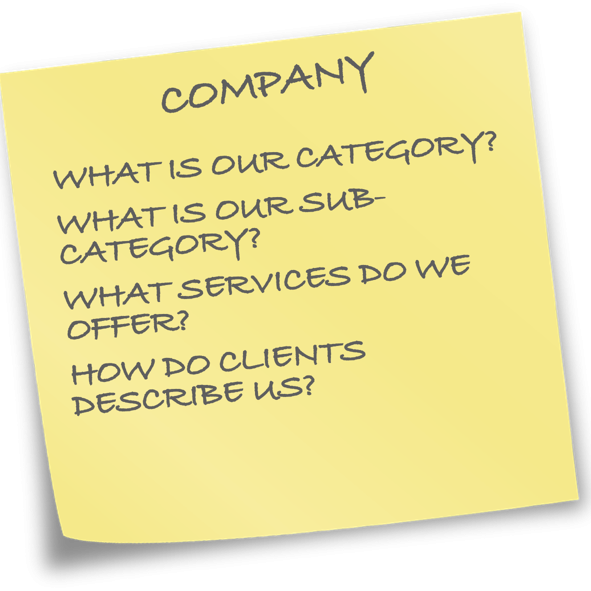
Everyone sticks their Post-Its up on the wall grouped around each question.
Then for Customer do the same around the following questions:
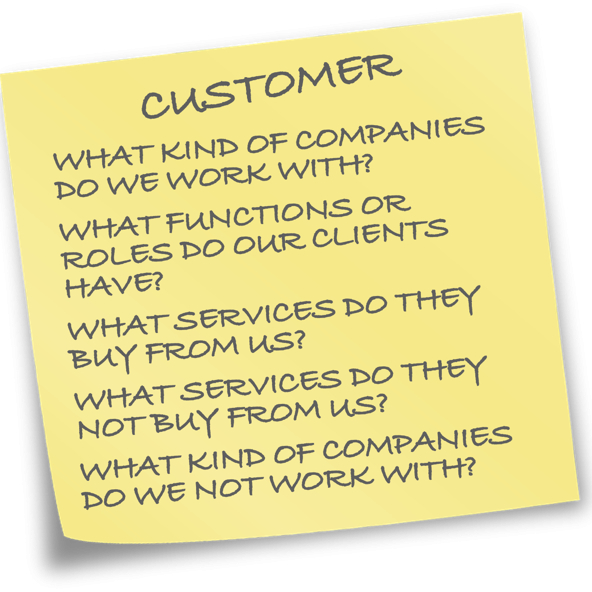
Post It's up on the wall, grouped as before.
Next do the same for Competition:
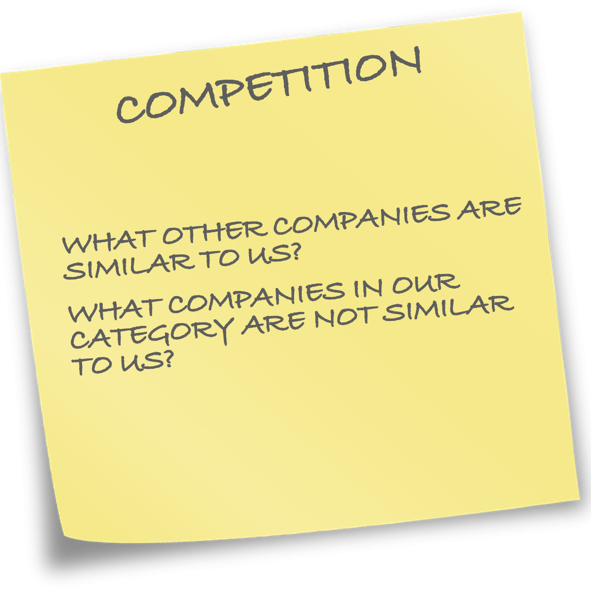
Finally go through each group, collectively challenge any outliers (don't be the CEO who claimed his agency was Tesla when everyone else in the business said Volvo, and demanded Tesla be used), add in any clear misses, and sub group by no more than 3 themes each question.
You now have an informed view on your brand's strengths and weaknesses, what customers want and need to persuade them to buy you and who you are in competition with.
Not externally tested, but still solid ground to develop a strategy and then marketing plan in the absence of any other research.
It's simple, I've used it so many times - often as a lead into other supporting research, sometimes as a stand alone.
It's better to know something than it is to know nothing.
* I also like dropping lyrics into articles, sorry not sorry.
Right. The Obvious Questions Answered.
Why does marketing strategy have to start with research? Can't we just get on with it?
You can get on with it. Plenty of businesses do. They just tend to spend a lot of money executing confidently in the wrong direction. Research doesn't have to be expensive or time-consuming. It does have to happen, even in rough form. Without it, every decision about who to target, what to say, and where to say it is based on internal assumption, what leadership believes buyers think, which is almost always different from what buyers actually think. The quick and dirty session takes a few hours and costs nothing beyond time. That's a small price to build on something real rather than something imagined.
What's the three Cs framework and how do we use it?
Company, Customer, Competition. Three columns. Honest answers in each. Under Company: how the business believes it's perceived, its strengths, weaknesses, reputation, positioning. Under Customer: what the business believes customers actually care about, what drives their buying decisions, what they see as the real alternatives. Under Competition: who you're genuinely competing against and how those competitors present themselves. The value of the exercise is in the gaps and contradictions it surfaces. Where internal confidence is disconnected from customer reality. Where there's no consensus on who the real competition is. Those gaps are the strategic work.
What questions should we ask customers to understand how they really see us?
Start with why they bought. Not 'what do you like about us', that gets you flattery, but 'what was happening in your business that made you start looking, and why did you end up choosing us over the alternatives?' Then ask what alternatives they seriously considered, and what would have made them choose someone else. Ask what they think you're best at and what you'd need to improve. Ask how they'd describe what you do to a colleague. The language they use is as valuable as the substance of what they say. Buyers who describe your product in words completely different from your own marketing copy are telling you something important.
How do we make sure the internal workshop produces honest answers and not just what the CEO thinks?
Give everyone equal voice before the room dynamic kicks in. The Post-it note format works because everyone writes their answers independently before sharing. The junior customer service person who talks to unhappy customers every day is as likely to have useful insight as the founder. More likely, often. The CEO's view of how customers see the business is not automatically more accurate than the receptionist's. It's just louder. Design the session so quiet truths can surface before the authority gradient flattens them.
When is the quick and dirty session not enough?
When the stakes are high enough that building a strategy on provisional insight carries real commercial risk. The quick and dirty session gives you a starting point, not a foundation. If you're repositioning a significant business, entering a new market, launching a major product, or committing serious budget to marketing investment, that warrants proper research. Customer interviews, buyer surveys with a statistically significant sample, competitive analysis with real rigour. The quick and dirty session is better than nothing and often better than expensive guesswork. It's not a substitute for the real thing when the real thing is warranted.
Right. The Obvious Questions Answered.
Why do so many agency-client relationships fail or underperform?
Because agencies optimise for what they care about, the work, the craft, the campaign, and assume clients care about the same things in the same proportions. They don't. CMOs and brand marketers typically spend around 5% of their time on agency-related work. What agencies obsess over for weeks is, from the client side, one item on a very long agenda that also contains budget cycles, internal politics, logistics problems, and things that have nothing to do with communications. The agencies that thrive are the ones that understand this and adapt to it. The ones that struggle keep presenting brilliant work to clients who are too stretched to engage with it properly.
What do clients actually want from their agency relationships?
Support, above all else. Not just campaign delivery but reduction of the client-side load. Take the heavy lifting away. Don't add to their workload. Make it easy to feel confident that things are in hand without having to chase, check, or manage closely. Understand the internal dynamics, the pressures they're under, the stakeholders they're managing, the priorities that will determine whether the work gets approved or killed. The agency that does excellent work and makes the client's job easier simultaneously is almost impossible to lose. The agency that does excellent work but is high maintenance gets cut even when the campaigns are good.
Shouldn't agencies push back when clients are wrong?
Yes, but in a way that lands as expertise, not stubbornness. There's a significant difference between 'we know better than you, here's why you're wrong' and 'we hear what you're asking for, and we want to share a concern about whether this approach will get you to the outcome you need.' The first is an agency speaking from self-interest. The second is one demonstrating it genuinely understands the client's commercial problem and has earned the right to a professional view. Clients brought the agency in because they need expertise they don't have internally. That expertise should show up. It just needs to show up in service of the client's goals.
How should agencies measure and demonstrate their value?
In the outcomes the client cares about, not the outputs the agency produces. Outputs are the campaign, the creative, the strategy document. Outcomes are what those things did for the client's business: revenue contribution, brand awareness movement, market share, pipeline. The further an agency can connect its work to commercial outcomes in the client's language, the more secure the relationship and the more credible the case for investment. Agencies that report primarily on their own activity are making the client do the work of connecting it to business value. The better agencies do that work themselves.
Why do agencies so often lose good clients they thought were happy?
Usually because they confused the absence of complaints with genuine satisfaction. A client who is quiet, broadly approves things, and renews contracts isn't necessarily delighted. They may just be too busy for the conversation they should be having, or too polite to say what they're actually thinking, or managing internal politics that make switching complicated right now. The best agency relationships are built on regular, honest conversations about whether the work is actually moving the needle, not just whether the client likes it. Agencies that actively invite that conversation, and are commercially rigorous about the answer, tend to keep clients far longer than those who focus exclusively on keeping the invoices paid.
If this kind of thing is your bag, follow me John Lyons on LinkedIn for more practical and actionable tips and hints on doing more effective marketing.